

Launching a business in the UK has never been more accessible, but there are situations where entrepreneurs cannot afford to wait. Whether you are entering a new market, preparing to sign a contract, expanding an international group, or responding to a commercial opportunity, having a company ready to operate immediately can be a significant advantage. This is where an off-the-shelf company, also known as a shelf company or ready-made company, becomes an attractive option.
Instead of incorporating a brand-new company, you purchase an existing company that has already been legally registered but has remained dormant. Once ownership is transferred, you can update the company’s details and begin using it for your business activities. If you’re planning to buy a UK shelf company in 2026, it’s important to understand how the process works, what is included, the costs involved, and the legal requirements you must still meet. This guide explains everything you need to know before making a purchase.
What Is an Off-the-Shelf Company?
An off-the-shelf company is a company that has already been incorporated with Companies House but has never traded. It has simply remained “on the shelf” until a buyer requires an immediately available legal entity. Once purchased, ownership of the company is transferred to the new owner, who can then update information such as
- Directors
- Shareholders
- Registered office
- SIC code (business activity)
- Company name (if required)
- Persons with Significant Control (PSC)
Unlike buying an active business, purchasing a shelf company generally does not include customers, contracts, employees, intellectual property, bank accounts or trading history. You are buying the legal corporate entity, not an operating business. Businesses looking for ready-made companies in multiple jurisdictions can explore the available options through Ready Made Companies Worldwide.
Why Businesses Buy UK Shelf Companies in 2026?
Although incorporating a new UK company can often be completed quickly online, many businesses still choose shelf companies because they provide an existing legal entity that is immediately available for transfer.
Common reasons include
Immediate Business Availability
For businesses working against tight commercial deadlines, purchasing a shelf company can reduce the time needed to obtain an incorporated entity.
This may be useful when
- A customer requires a company before signing a contract
- A tender submission has a fixed deadline
- International expansion must happen quickly
- Investors require an incorporated business
- Assets need to be transferred into a company immediately
The company already exists, allowing the ownership transfer process to begin without waiting for incorporation.
Established Incorporation Date
One characteristic of a shelf company is that it already has an incorporation date recorded at Companies House. While an older incorporation date should never be confused with trading experience, some businesses prefer using an entity that has existed for a longer period, particularly when dealing with commercial partners that review public company records.
It is important to remember that company age alone does not demonstrate
- Revenue
- Creditworthiness
- Financial stability
- Commercial reputation
- Trading history
Sophisticated customers, lenders and investors will review publicly available information before reaching any conclusions.
International Expansion
Many overseas businesses establish a UK presence before launching operations. Buying a ready-made company can support international businesses that wish to
- Enter the UK market
- Establish a UK subsidiary
- Open discussions with suppliers
- Prepare for local recruitment
- Build a UK corporate structure
Businesses expanding internationally may also require companies in other jurisdictions. RMC offers ready-made companies across numerous countries, including Australia and many other international locations.
Business Continuity
Some organisations require a company immediately because of restructuring, acquisitions or group reorganisations. Rather than waiting for incorporation, an existing dormant company can sometimes simplify the timing of wider commercial transactions.
Who Should Buy a UK Shelf Company?
A shelf company is not the right solution for every entrepreneur. It is generally most suitable for
-
International Businesses
Companies establishing a UK presence often prefer purchasing an existing company to accelerate their market entry.
-
Entrepreneurs Working to Tight Deadlines
Where commercial opportunities depend on having an incorporated business quickly, a shelf company may help reduce delays.
-
Corporate Groups
Businesses creating subsidiaries or restructuring existing organisations may prefer an immediately available legal entity.
-
Professional Service Firms
Consultants, advisers and investors who regularly establish companies for clients sometimes purchase shelf companies to meet client deadlines.
-
Overseas Investors
Foreign investors entering the UK market often require a company before opening discussions with banks, landlords or commercial partners. However, if your business has no urgency and you simply need a standard UK company, incorporating a new company may be a more cost-effective solution.
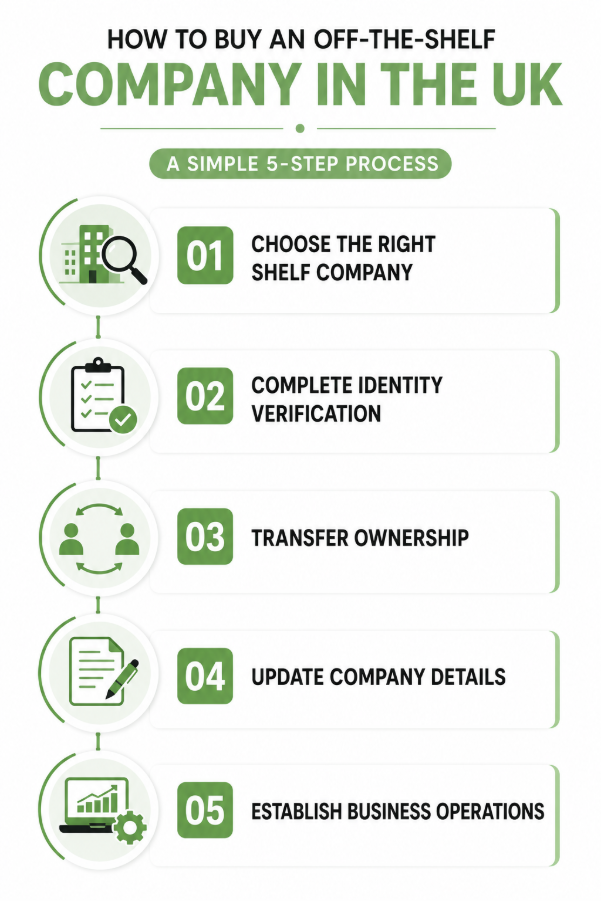
Step-by-Step Process to Buy a UK Shelf Company
Buying a shelf company is more than simply paying for an existing business. The process involves legal ownership changes, compliance checks and updating statutory records.
Step 1 – Choose the Right Shelf Company
The first step is selecting a company that matches your requirements.
You should consider
- Incorporation date
- Jurisdiction
- Dormancy status
- Filing history
- Previous activity (if any)
- Company name
- Industry suitability
A reputable provider should be able to explain the company’s background and confirm whether it has remained dormant.
Step 2 – Complete Identity Verification
Under the Economic Crime and Corporate Transparency Act, Companies House has introduced identity verification requirements for individuals who own or control UK companies. When purchasing a shelf company, the new directors and Persons with Significant Control (PSCs) must comply with the applicable identity verification rules before completing the transition. You can review the latest guidance on the Companies House identity verification requirements via GOV.UK.
Step 3 – Transfer Ownership
The provider will prepare the necessary documentation to transfer ownership.
This typically includes changes to
- Shareholders
- Directors
- PSC register
- Company registers
- Share certificates
The transfer process should also ensure that all statutory records are updated accurately so the company reflects its new ownership and management structure before trading begins. Once completed, the company legally belongs to the purchaser.
Step 4 – Update Company Details
Most buyers immediately customise the company for their intended business.
Typical updates include
- Registered office
- Trading address
- Business activity (SIC code)
- Company name (if required)
- Contact details
Updating these details ensures the company accurately reflects your business identity and is ready for operational, legal and regulatory purposes. These changes are then filed with Companies House where applicable.
Step 5 – Establish Business Operations
After the ownership transfer is complete, the company can begin preparing for normal trading activities.
This usually includes
- Opening a business bank account
- Registering for Corporation Tax where required
- Registering for VAT if applicable
- Obtaining relevant licences
- Purchasing business insurance
- Setting up accounting systems
- Establishing statutory records
Although the company already exists, these operational steps still need to be completed before trading successfully.
What Do You Get When You Buy a Shelf Company?
One of the biggest misconceptions is that buying a shelf company means acquiring an established business. In reality, you are purchasing a legally incorporated company that has typically remained dormant since its formation.
Depending on the provider, a UK shelf company generally includes
- A legally incorporated UK limited company
- A Companies House registration number
- Certificate of Incorporation
- Memorandum and Articles of Association
- Company registers and statutory records
- Issued share capital (usually standard shares)
- A registered office address (where included in the package)
Once ownership is transferred, you can customise the company to suit your business by changing the directors, shareholders, registered office, company name (if required) and business activity. It is equally important to understand what is not included. A shelf company does not normally come with
- Trading history
- Existing customers
- Revenue or assets
- Intellectual property
- Business contracts
- Employees
- Business bank account
- Tax registrations (unless specifically stated)
If your goal is to begin trading quickly, these elements must still be arranged after the purchase.
How Much Does It Cost to Buy a UK Shelf Company?
The cost of buying a UK shelf company varies depending on factors such as the company’s age, filing history, included services and the provider you choose.
Typical costs may include
| Expense | Typical Cost |
| Shelf company purchase | £300–£1,500+ |
| Registered office service (if required) | Additional annual fee |
| Company name change (if required) | Usually included or small additional cost |
| Accounting setup | Varies by provider |
| Legal or professional advice | Depends on requirements |
Older companies or companies with desirable incorporation dates generally command higher prices than newly formed dormant companies. Beyond the purchase price, businesses should also budget for ongoing operating costs, including
- Annual Confirmation Statement
- Corporation Tax compliance
- Annual accounts
- Accounting services
- VAT registration (where applicable)
- Registered office renewal
- Business insurance
Remember that buying a shelf company does not remove your ongoing statutory obligations.
Legal and Compliance Requirements in 2026
Buying a shelf company does not exempt the new owners from UK company law. Once ownership has been transferred, the company must comply with all applicable legal and reporting obligations.
Key requirements include
Identity Verification
Under the Economic Crime and Corporate Transparency Act, Companies House is introducing mandatory identity verification for directors, Persons with Significant Control (PSCs) and certain individuals filing information on behalf of companies. Buyers should ensure these requirements are completed promptly after the transfer.
Companies House Filings
The company must continue filing
- Annual accounts
- Confirmation Statements
- Director updates
- Shareholder changes
- Registered office changes (where applicable)
Failure to meet filing deadlines can result in penalties and potential removal from the Companies House register.
Corporation Tax Registration
If the company begins trading, HMRC must be notified and Corporation Tax obligations must be met. Depending on the business activities, additional registrations may also be necessary, including
- VAT
- PAYE
- Employer registrations
Beneficial Ownership
Companies must maintain accurate information regarding their Persons with Significant Control (PSC) and update Companies House whenever changes occur. Maintaining accurate corporate records is an ongoing legal responsibility, regardless of whether the company was newly incorporated or purchased as a shelf company.
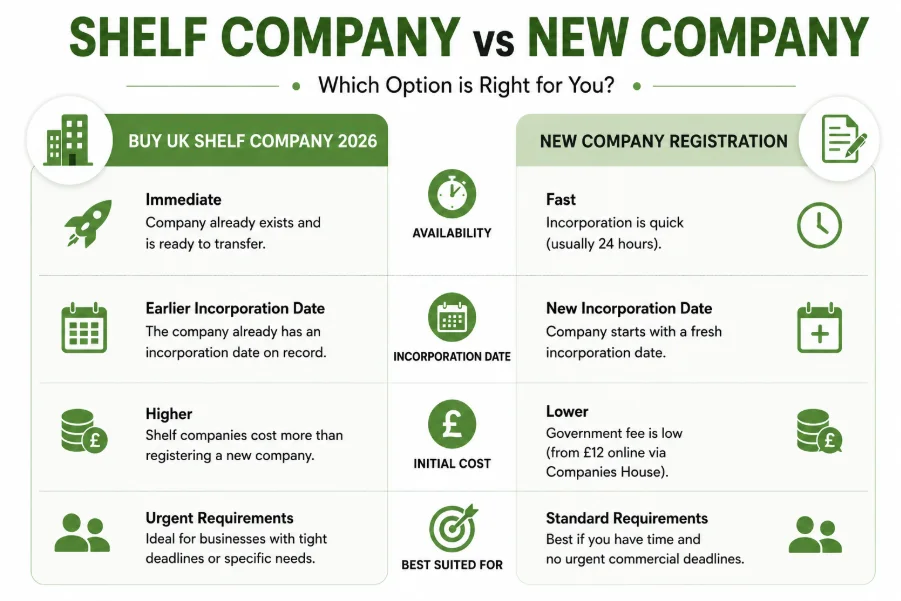
Shelf Company vs New Company Registration
Both options allow you to operate a UK business, but each suits different circumstances.
| Shelf Company | New Company |
| Existing incorporated entity | Newly incorporated business |
| Immediate legal company available | Incorporated from scratch |
| Higher initial purchase cost | Lower incorporation cost |
| Earlier incorporation date | New incorporation date |
| Requires due diligence | Clean corporate history |
| Suitable for urgent requirements | Suitable when time is available |
For businesses working to strict commercial deadlines, a shelf company may provide additional flexibility. However, if speed is not essential, incorporating a new company may be the more economical option. The decision should be based on your commercial objectives rather than simply the age of the company.
Common Mistakes to Avoid
Before buying a UK shelf company, avoid these common mistakes
Choosing Price Over Reputation
The cheapest provider may not offer the level of due diligence or support your business requires. Always work with an experienced provider.
Failing to Review the Company’s History
Even dormant companies should be checked carefully. Review the filing history, previous officers and statutory records before proceeding.
Assuming Everything Is Ready to Trade
A shelf company still requires operational setup, including banking, tax registrations and accounting systems.
Ignoring Ongoing Compliance
Once you become the owner, you are responsible for meeting all future filing and reporting obligations.
Not Seeking Professional Advice
Where complex ownership structures, overseas shareholders or tax planning are involved, professional legal and accounting advice can help prevent costly mistakes later.
Why Buy Through a Specialist Provider?
Buying a shelf company is more than purchasing an incorporated entity, it involves ensuring the transfer is completed correctly and that the company is suitable for your intended use.
An experienced provider can assist with
- Selecting an appropriate company
- Preparing transfer documentation
- Updating statutory records
- Director and shareholder changes
- Registered office services
- Ongoing corporate support
- International company formation requirements
Ready Made Companies Worldwide provides access to UK shelf companies as well as ready-made companies across multiple international jurisdictions. Businesses looking for tailored advice can contact our team to discuss the most suitable option for their requirements.
Conclusion
Buying a UK shelf company can be an effective way to obtain an established legal entity and begin preparing your business for trading without waiting for a new incorporation. However, it is important to understand that purchasing a shelf company does not eliminate your legal or compliance responsibilities.
Before proceeding, review the company’s history, understand the costs involved and ensure the entity meets your business objectives. Working with a reputable provider and obtaining professional legal and tax advice will help you make an informed decision and build your business on a solid foundation.