

The UK business environment is entering a decisive new phase. As we approach 2026, company regulation in the UK is shifting from historically light-touch oversight to a far more assertive enforcement model. Directors, shareholders, investors, and advisers are now facing stricter scrutiny from Companies House, HMRC, banks, and other regulatory bodies. For many businesses, particularly those formed quickly or operating remotely, these changes will significantly affect how companies are incorporated, maintained, and assessed.
This includes new incorporations, buyers of shelf companies, and foreign or non-resident directors operating UK entities. This guide explains what UK business law changes in 2026, UK tax changes for businesses in 2026, and UK company filing requirements in 2026 really mean in practice. It also outlines how Readymade Companies Worldwide (RMC) helps businesses stay compliant in a much stricter regulatory environment.
The Big Picture – What Is Driving UK Business Changes in 2026
Several forces are shaping the future of UK business in 2026
- The government’s intensified focus on economic crime prevention
- A push for greater corporate transparency
- Closing the UK’s tax gap through improved data sharing
- Post-Brexit regulatory independence
- Alignment with global AML, FATF, and OECD standards
Together, these drivers mean that informal or loosely maintained company structures are no longer viable. Compliance is no longer passive; it is becoming proactive, continuous, and data-driven.
Companies House Reform – The Biggest Shift UK Businesses Face
One of the most impactful UK compliance changes for companies comes from the ongoing reform of Companies House under the Economic Crime framework. Companies House is no longer just a passive registry. By 2026, it will have expanded powers to
- Verify identities of directors, PSCs, and shareholders
- Reject filings that appear inaccurate or misleading
- Remove incorrect or suspicious data
- Share intelligence with HMRC, banks, and enforcement bodies
For existing companies and shelf companies alike, this marks a fundamental shift. Accuracy, consistency, and verification will be critical.
Director & PSC Identity Verification Requirements
These measures aim to strengthen corporate transparency and prevent the misuse of UK companies through anonymous or opaque ownership structures.
Who must verify?
- Directors
- Persons with Significant Control (PSCs)
- In some cases, shareholders
What happens if verification fails?
- Filings may be rejected
- Companies may be flagged for monitoring
- Banking access may be delayed or denied
This is especially relevant for
- Overseas directors
- Nominee arrangements
- Shelf companies with outdated records
In 2026, a clean incorporation date alone will not protect a company. Verified identities and accurate filings will matter more than company age.
Tax Changes Impacting UK Companies in 2026
UK Corporate Tax Updates 2026
While headline corporation tax rates may not change dramatically, enforcement will. HMRC is increasing real-time data matching with Companies House and banking institutions.
Key tax-related changes include
- Closer review of dormant-to-active companies
- Increased VAT scrutiny for cross-border traders
- Faster penalties for discrepancies between filings and actual activity
These UK tax changes for businesses in 2026 mean shelf companies must remain genuinely dormant before sale. Any false dormancy or pre-sale activity increases risk dramatically.
Filing & Reporting Changes Businesses Must Prepare For
UK company filing requirements in 2026 will be stricter and less forgiving. Businesses should expect
- Tighter checks on confirmation statements
- Reduced tolerance for generic SIC codes
- Faster penalties for late or inaccurate filings
- Expanded use of digital reporting systems
Errors that once went unnoticed are increasingly being flagged automatically. As a result, even minor inaccuracies can now trigger compliance reviews, enforcement action, or delays in banking and regulatory approvals.
How do these changes affect UK Shelf Companies?
Contrary to some misinformation, compliant shelf companies remain legal and valuable in 2026. However, regulators are now actively targeting
- Shell misuse
- Opaque ownership
- Recycled or previously used entities
- False dormancy claims
This creates a clear divide between verified shelf companies and high-risk offerings sold without proper documentation.
Shelf Company Buyers – New Risks You Must Avoid in 2026
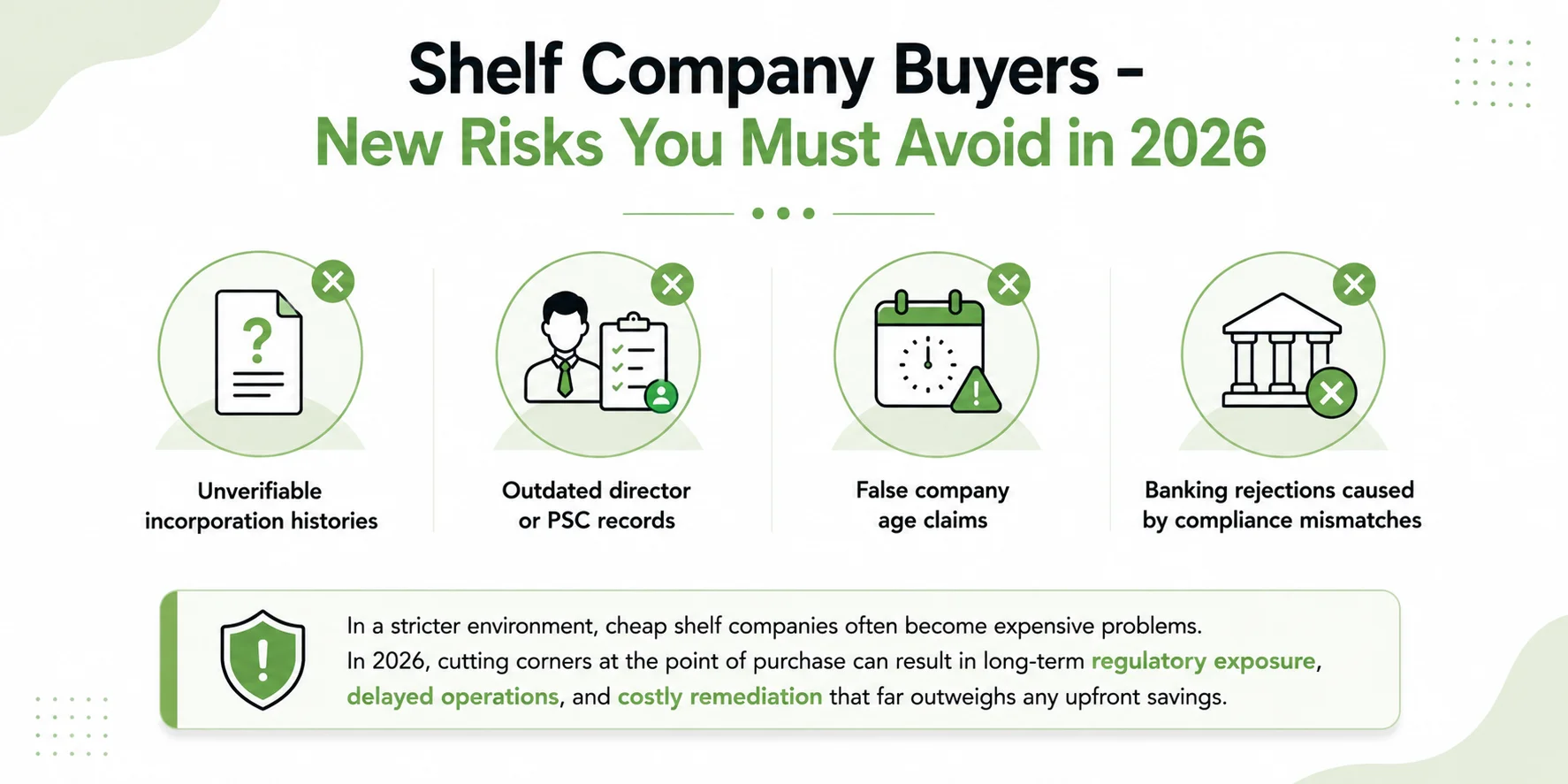
As regulatory checks intensify, shelf company buyers are increasingly exposed to risks that were previously overlooked or undiscovered at the point of purchase.
- Unverifiable incorporation histories
- Outdated director or PSC records
- False company age claims
- Banking rejections caused by compliance mismatches
In a stricter environment, cheap shelf companies often become expensive problems. In 2026, cutting corners at the point of purchase can result in long-term regulatory exposure, delayed operations, and costly remediation that far outweighs any upfront savings.
Advantages of Buying a Fully Compliant Shelf Company in 2026
In an environment of heightened scrutiny and enforcement, compliance has become a competitive advantage rather than a regulatory burden.
- Faster operational start with verified records
- Improved banking readiness
- Reduced regulatory friction
- Greater credibility with partners and platforms
In many cases, speed combined with compliance outweighs the benefits of new incorporation.
UK Shelf Company vs New Incorporation in 2026
| Factor | Compliant Shelf Company | New Incorporation |
| Setup Speed | Immediate or very fast | Slower |
| Banking Readiness | Higher if compliant | Often requires explanation |
| Compliance Risk | Low if verified | Starts clean |
| Regulatory Scrutiny | Higher expectations | Lower initially |
| Flexibility | High | High |
This comparison highlights why due diligence and provider quality matter more than ever.
When New Incorporation May Be Safer Than a Shelf Company?
Despite the advantages of shelf companies, there are situations in which starting from scratch offers greater regulatory clarity and control. New incorporation may still be preferable for
- Highly regulated industries
- Businesses requiring bespoke licensing
- Jurisdictions with extremely strict onboarding rules
In these cases, a new incorporation allows businesses to design their structure, compliance framework, and licensing pathway precisely in line with regulatory expectations from day one.
How RMC Future-Proofs UK Companies for 2026?
With regulatory expectations rising, businesses need structures that can withstand long-term scrutiny rather than just enable quick setup. RMC prepares clients for UK compliance changes for companies by providing
- Pre-verified, genuinely dormant shelf companies
- Clean incorporation and filing histories
- Director & PSC compliance readiness
- Transparent ownership transfers
- Post-purchase compliance guidance
- Banking-friendly documentation
This end-to-end approach enables businesses to operate confidently in a more stringent regulatory environment without compromising speed, credibility, or compliance.
What UK Business Owners Should Do Now?
Proactive preparation is essential as regulatory enforcement tightens and tolerance for errors continues to decline. To prepare for UK business in 2026, companies should
- Audit existing records
- Verify the director and PSC details
- Prepare for identity verification
- Review VAT and tax alignment
- Work with experienced compliance partners
Taking these steps early helps businesses minimise disruption, avoid enforcement action, and maintain uninterrupted access to banking, contracts, and growth opportunities.
Conclusion
2026 marks the end of informal corporate setups in the UK. Compliance will increasingly define access to banking, contracts, and sustainable growth. UK shelf companies still work, but only when fully compliant. As UK business law changes in 2026, businesses that prepare early will gain a clear advantage. By combining speed with verified compliance, and by working with trusted providers, companies can operate confidently in a far stricter regulatory landscape.