

The global rise of digital nomads and remote entrepreneurs has transformed the way businesses are built and operated. With cloud software, online banking, and virtual collaboration tools, founders no longer need a physical office or permanent location to run a successful company. Businesses today can be managed from anywhere in the world. However, while technology has removed geographical barriers, it has not eliminated administrative and regulatory challenges. Remote founders still face difficulties when setting up companies, opening bank accounts, meeting compliance requirements, and gaining credibility with clients and platforms.
This is where shelf companies for digital nomads have emerged as a potential solution. Shelf companies offer a ready-made legal structure that can significantly reduce setup time and administrative friction. This article helps digital nomads and remote entrepreneurs understand what shelf companies are, why they are used, the advantages and risks involved, and how to decide whether this approach aligns with their business goals.
Who Are Digital Nomads and Remote Entrepreneurs?
Digital nomads and remote entrepreneurs are business owners who operate without being tied to a single location. They typically work online and serve clients across multiple countries.
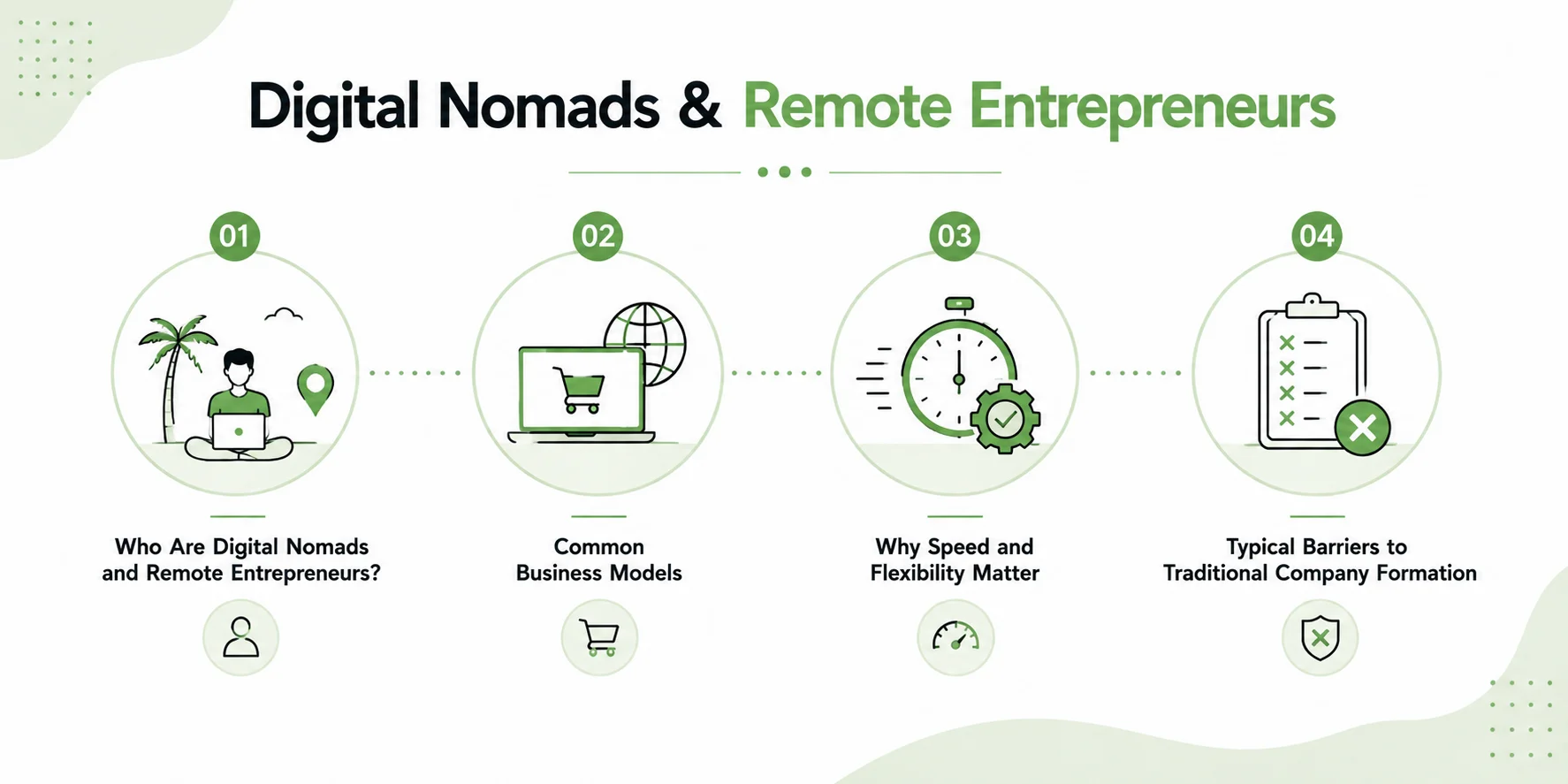
Common Business Models
- Consulting and professional services
- SaaS and software businesses
- E-commerce and dropshipping
- Marketing, design, and development agencies
- Freelancing and digital services
Why Speed and Flexibility Matter
Remote founders prioritise
- Fast setup without in-person requirements
- Ability to operate across borders
- Minimal bureaucracy
- Compatibility with global platforms and payment systems
Typical Barriers to Traditional Company Formation
- Physical presence requirements
- Long incorporation timelines
- Complex banking onboarding
- Jurisdiction-specific compliance rules
These challenges often push remote entrepreneurs to explore alternatives, such as shelf companies.
What Is a Shelf Company?
A shelf company, also known as a readymade company, is a business entity that has already been legally incorporated but has never traded.
How Shelf Companies Differ from New Incorporations
- Already registered with the authorities
- No trading history or liabilities
- Maintained in dormant status
- Available for immediate ownership transfer
What Buyers Inherit
- An existing incorporation date
- Company registration number
- Dormant compliance history
- Legal structure ready for use
This ready-to-use nature makes shelf companies appealing to international founders who want speed without sacrificing compliance.
Why Digital Nomads Consider Shelf Companies?
Digital nomads often consider shelf companies because they allow businesses to be set up remotely from anywhere in the world, without the need for physical presence or lengthy administrative procedures. By enabling faster market entry and reducing paperwork and registration backlogs, shelf companies help remote entrepreneurs move quickly when opportunities arise. They also align more easily with global clients, online platforms, and international banking requirements. For remote founders, time lost to incorporation delays can directly translate into missed contracts or revenue opportunities, making speed a decisive factor.
Key Advantages of Shelf Companies for Remote Entrepreneurs
Advantage 1 – Speed and Immediate Readiness
Shelf companies allow founders to bypass lengthy registration processes. Ownership transfer can often be completed within days, making them ideal for time-sensitive projects, contracts, or platform onboarding.
Advantage 2 – Established Company Age
An older incorporation date can enhance credibility with
- Clients and partners
- Banks and payment providers
- Marketplaces and advertising platforms
This is particularly valuable when contracts or applications require a minimum company age.
Advantage 3 – Easier Banking Preparation
A clean, dormant history supports AML and KYC checks, making shelf companies easier to assess than brand-new entities when applying for international banking or payment services.
Advantage 4 – No Local Residency Requirements
Many shelf companies are suitable for non-resident founders, allowing digital nomads to operate globally without relocating or maintaining physical offices.
Advantage 5 – Flexible Global Structuring
Shelf companies can be used for
- Holding structures
- Subsidiaries
- International expansion
- Long-term global growth strategies
The Risks Digital Nomads Must Consider
Despite their advantages, shelf companies are not without risks. If due diligence is insufficient, buyers may inherit hidden liabilities or unresolved compliance issues. Digital nomads must also be prepared for increased banking scrutiny under strict AML and KYC regulations, particularly as non-resident owners.
In addition, ongoing compliance obligations across multiple jurisdictions can create administrative complexity, and working with unreliable or non-transparent providers can significantly increase exposure to legal and financial risks. Understanding these factors is essential before deciding to proceed with a shelf company.
Shelf Company vs New Incorporation for Digital Nomads
| Factor | Shelf Company | New Incorporation |
| Setup Speed | Immediate or very fast | Can take weeks |
| Remote Accessibility | High | Varies by jurisdiction |
| Banking Readiness | Often stronger if compliant | May require more explanation |
| Compliance Burden | Ongoing, inherited filings | Starts from zero |
| Long-Term Flexibility | High with proper structuring | High but slower start |
This comparison helps remote founders evaluate which option best fits their priorities.
Compliance Considerations for Remote Founders
Remote entrepreneurs must remain mindful of compliance requirements, regardless of their setup method. Key considerations include
- Verifying a clean company history
- Meeting AML/KYC expectations as non-resident owners
- Maintaining annual filings and statutory records
- Understanding local vs international compliance obligations
Shelf companies simplify setup, but they do not eliminate compliance responsibilities.
When a Shelf Company Makes Sense for Digital Nomads
Shelf companies are particularly suitable for
- Urgent client onboarding
- Contract-driven businesses
- SaaS and platform-based income models
- International consulting and services
In these cases, speed and credibility often outweigh the benefits of starting from scratch.
When a Shelf Company May Not Be the Right Choice
A shelf company may not be ideal if
- The business operates in a highly regulated sector
- Local licences or physical premises are mandatory
- A brand-new incorporation offers clearer regulatory positioning
Sometimes, a clean new entity provides greater certainty.
How RMC Supports Digital Nomads and Remote Entrepreneurs?
RMC specialises in helping international founders use shelf companies safely and effectively. RMC provides
- Guaranteed dormant companies
- Verified compliance and clean histories
- Transparent ownership transfers
- Banking and compliance guidance
- Support tailored to non-resident founders
This structured support helps remote entrepreneurs avoid common setup pitfalls while maintaining full regulatory compliance from day one. By combining speed with due diligence, RMC enables digital nomads to focus on growing their businesses rather than navigating complex administrative processes.
Conclusion
Shelf companies for digital nomads can be powerful tools when used correctly. They offer speed, credibility, and global flexibility, but they are not shortcuts to success. The right choice depends on business model, timing, and compliance readiness. By understanding the advantages and risks, conducting proper due diligence, and working with a trusted provider, remote entrepreneurs can decide whether a shelf company supports their long-term goals or whether a new incorporation is the better path. If used strategically, shelf companies can help digital nomads turn location independence into real business momentum.